







Veteran
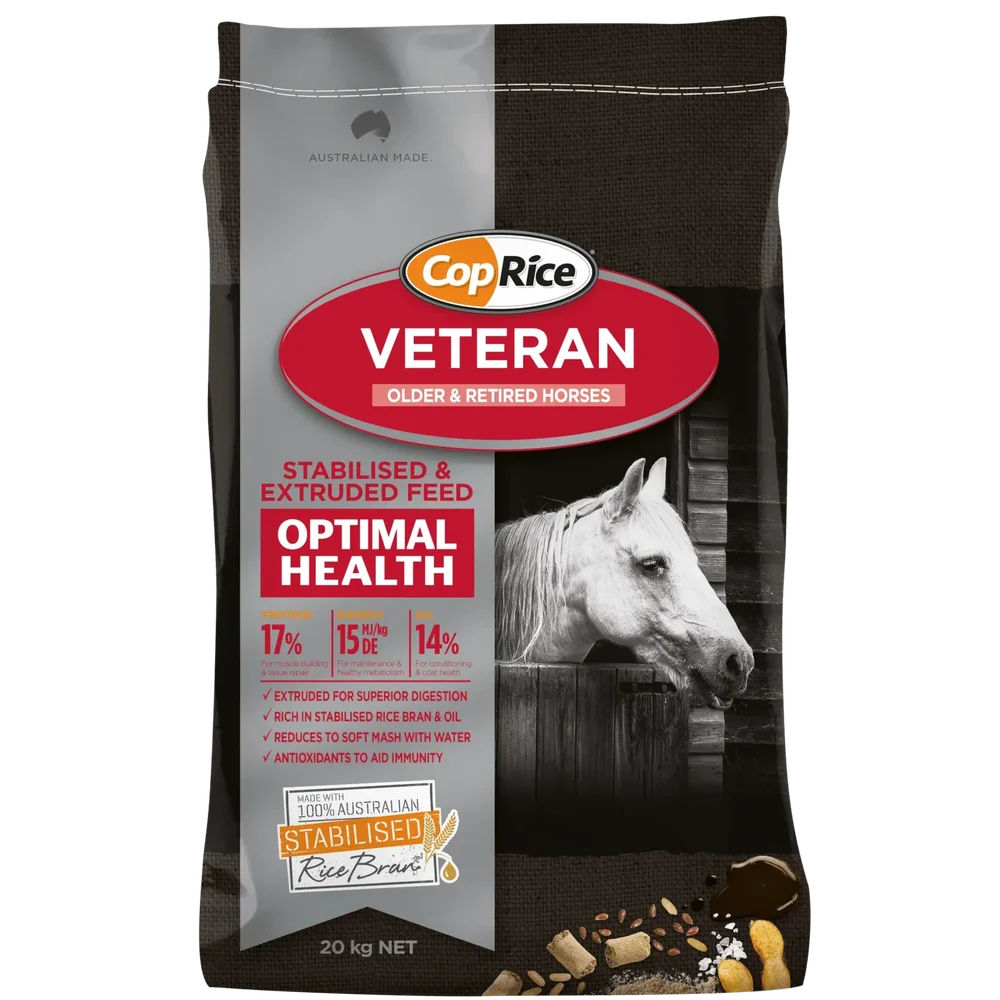
Wholesome, balanced and designed specifically for aged horses (working or retired).
Product Information
Protein
17%
For muscle building & tissue repair
Energy
15MJ DE/KG
For maintenance & healthy metabolism
Oil
14%
For cool energy and coat shine
How to feed
- Introduce into horse’s ration gradually over 2 weeks.
- Feed in conjunction with ample forage (At least of 1.5-2% of your horse’s body weight daily) in the form of pasture, hay and/or chaff.
- Make clean, fresh water and salt available at all times.
- Adjust the amount fed so it is appropriate for your horse’s body fatness, growth rate, stage of development, pregnancy or lactation, along with the quality and quantity of forage available.
- Divide feeds into two or more smaller meals if feeding more than 0.5 kg per 100 kg of bodyweight in ‘hard feed’ per day. The amount of feed required will depend on the quality of the pasture/forage, exercise intensity, dentition, metabolism and condition of the horse.
Ingredients
- Stabilised rice bran
- Wholegrain rice
- Soybean meal
- linseed
- Calcium carbonate
- potassium choloride
- molasses
- salt
- canola oil
- vitamin
- mineral premix
- organic selenium
- Vitamin C
- Yeast Culture
Typical Analysis
| Crude Protein | Min. 17% |
|---|---|
| Energy (DE) | Min. 15MJ |
| Crude Fat | Min. 14% |
| Crude Fibre | Max. 10% |
| Salt | Max. 1.5% |
| Carbohydrate | 20% |
| Calcium | 1.4% |
| Phosphorus | 1.1% |
| Magnesium | 0.6% |
| Vitamin C | 100mg |
Vitamins
| Vitamin A | 10,000 IU |
|---|---|
| Vitamin D3 | 2,000 IU |
| Vitamin E | 280mg |
| Vitamin K | 2mg |
| Vitamin B1 | 20mg |
| Vitamin B2 | 12mg |
| Vitamin B3 | 250mg |
| Vitamin B5 | 15mg |
| Vitamin B6 | 7mg |
| Vitamin B12 | 50μg |
| Folic Acid | 5mg |
| Choline | 1,300mg |
| Biotin | 1,500μg |
| Vitamin C | 100mg |
Macro-Minerals
| Salt | 11g |
|---|---|
| Calcium | 14g |
| Magnesium | 6g |
| Phosphorus | 11g |
| Potassium | 12g |
Micro-Minerals
| Cobalt | 0.8mg |
|---|---|
| Copper | 70mg |
| Iodine | 2.3mg |
| Iron | 150mg |
| Manganese | 200mg |
| Selenium | 1mg |
| Zinc | 200mg |
Fatty Acids
| Oleic | (Omega 9) |
|---|---|
| Linoleic | (Omega 6) |
| Alpha Linoleic | (Omega 3) |
Amino Acids
| Lysine | 8g |
|---|---|
| Methionine | 3g |
Other products you might enjoy
 Chooks
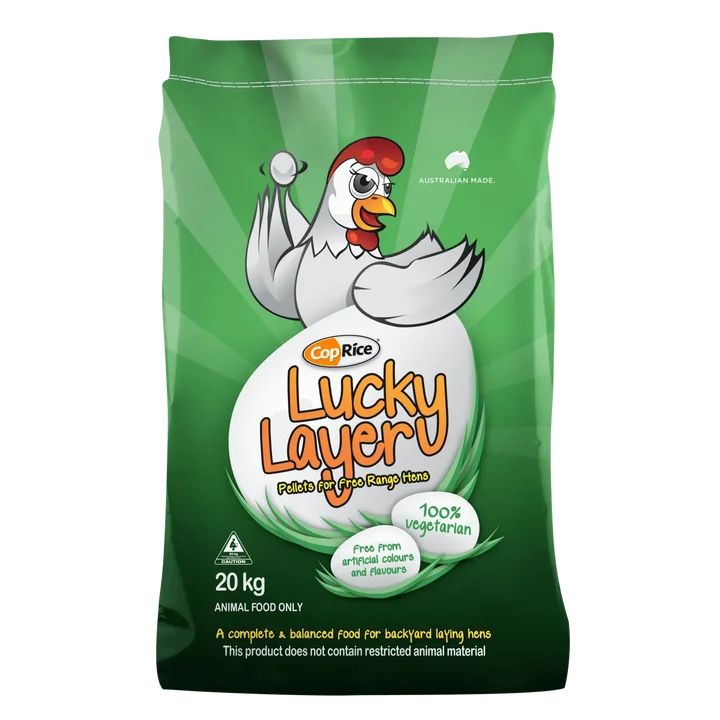
Lucky Layer
Plant-powered, high protein and balanced, CopRice Lucky Layer is a 100% vegetarian chook food pellet (with marigold extract) for free-range layer…
View more
Chooks
Lucky Layer
Plant-powered, high protein and balanced, CopRice Lucky Layer is a 100% vegetarian chook food pellet (with marigold extract) for free-range layer…
View more
 Dairy
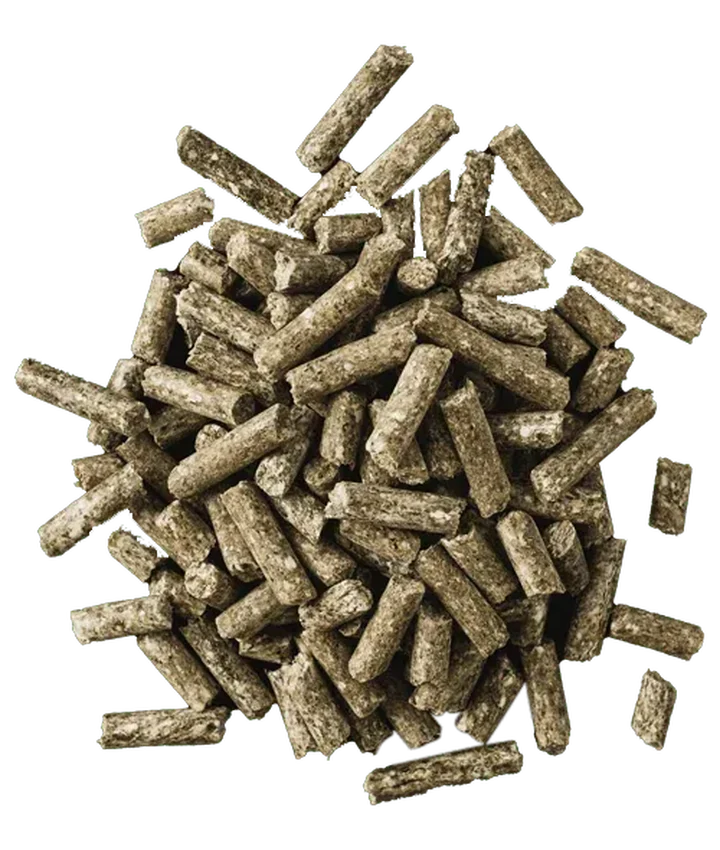
CopRice 12.5 Dairy Pellets
CopRice Dairy pellets are scientifically formulated to meet the nutritional requirements of medium and high production dairy cows. Each formulation…
View more
Dairy
CopRice 12.5 Dairy Pellets
CopRice Dairy pellets are scientifically formulated to meet the nutritional requirements of medium and high production dairy cows. Each formulation…
View more
 Dairy
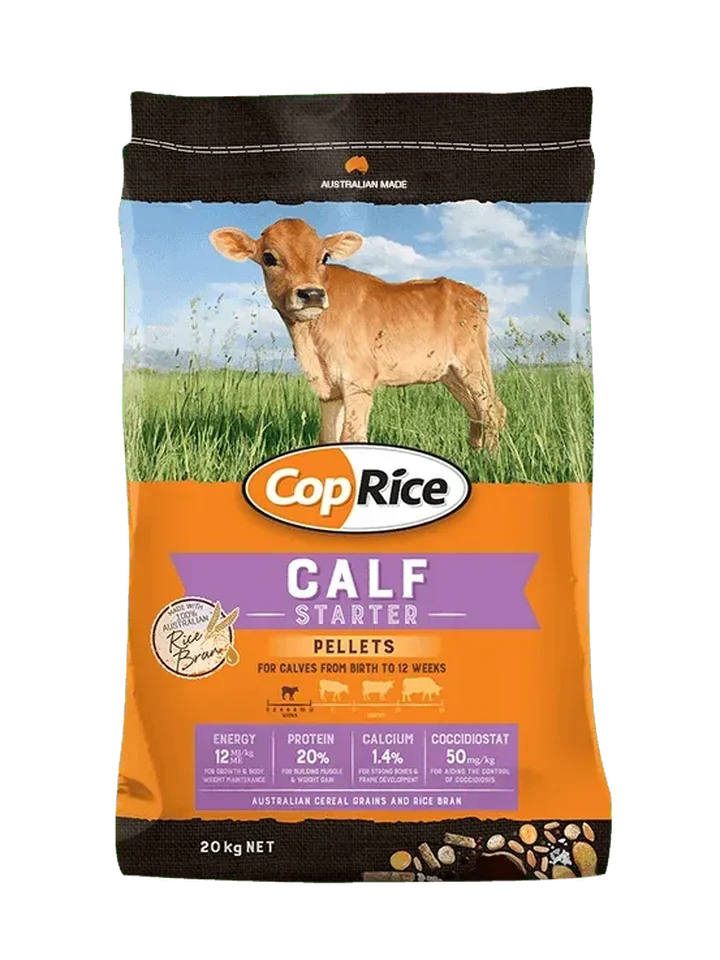
Calf Starter
A highly palatable starter feed for transition of calves from liquid to solid feed from a few days old until progression to pasture at around 12…
View more
Dairy
Calf Starter
A highly palatable starter feed for transition of calves from liquid to solid feed from a few days old until progression to pasture at around 12…
View more